
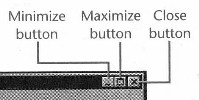
 To view this page full-screen, click on the "Maximize" button in the upper right corner.
To exit this page, click on the "Close" [x] box;
the "Back" button won't work.
When you hire someone to sell an item for you.
This page is about hiring me to sell an item for you on Ebay, the Internet auction site.
Before you contact me, please read the information on this web page -- it should answer most of your questions. If your question or concern isn't covered, or if you'd like to go ahead and sell an item, an email link and my email address are at the bottom of this page.
World Wide Market Place
Your item can be seen by people world-wide. Your item can be seen by far more potential buyers than by ANY other method. And those people will be actively searching for your specific item with a search engine, rather than just randomly walking around a mall somewhere. They got to your item because they were looking for it. Thus, making potential customers aware your item for sale is already taken care of; that's a big advantage over a strip mall store that has to wait for you to walk in their door.
You'll Probably Get More Money For An Unusual Item or Expensive Item
If the item you want to sell is rare and in great condition, chances are excellent you'll get top dollar for it because there are so many people, from all over the world, who can find it on Ebay.
Collectors are an especially important group of prospective customers at Ebay. They are always on the prowl, looking for the kinds of items they collect. If you have what they're looking for, their inclination to buy it goes up exponentially.
Certain kinds of items bring good prices, even though they are not necessarily "collectible". For example, if you have a 1980's Fender Rhodes portable piano, a rock band will pay heavy-duty dollars for it because it has a mellow sound today's digital pianos just don't have. I know that because I recently sold one for a consignment client -- to a buyer in Germany!
Good Demographics
People looking for something on Ebay tend to be upper income folks, people with money to spend. But they are also fussy buyers; they know exactly what they want, and they want it right now. Appealing to them in the right way is critical. Making it easy for them to buy your item is also important.
Control
If you place a classified newspaper ad to sell an item, all you can do is hope the newspaper company will do what it can to sell newspapers so people in your area will see your ad.
A seller has more control over the things he can do to help sell an item on Ebay, but success will depend more on knowing how to do it.
SELLING ON THE INTERNET?
Sure. Nothing is perfect.
No Touchy Feely
At a store, a customer can hold and carefully examine a product before he buys it. But he can't do that with an item on his computer screen; he can't hold the product in his hands or even get physically close to it.
Thus, selling an item on-line depends entirely on the ability to attractively present the item in pictures and words to someone far away. The clarity of the pictures and the wording of the description in the listing is very important.
Fast Delivery is Important
The buying public has come to expect that they can get anything they want RIGHT NOW. The fact that there's a significant delay between the time an Internet customer buys an item, and when he physically receives it, works to the seller's disadvantage, especially when compared to a transaction at a local retail store.
Local Delivery
Few items are sold to people who live in the seller's area.
Even if the customer does live nearby, arrangements must be made for someone you don't know to come to your residence to pick up the item you sold them. Even if the matter of security is ignored, waiting for a customer to pick up an item is like waiting for the telephone repair man. You have to be home when the customer arrives. Don't count on a customer arriving at the time she said she would -- or coming at all.
Nearly Everything Has To Be Shipped
Probably 99% of the items sold on the Internet have to be shipped to the customer via the U.S. Mail, UPS, FedEx, or truck. Shipping supplies must be kept on hand, and expert packaging is required to make sure the item arrives undamaged -- no small challenge for a fragile item. Packaging an item can take a surprising amount of time and expertise; a large work of art framed in glass takes at least an hour.
Selecting the appropriate shipping method for each item is important. If the package exceeds a certain size, weight, or type, it can have a tremendous impact on the shipping cost. Ignorance in this area can eat up much of the profit the seller hoped to make.
Selling outside the USA requires knowing the ins and outs of shipping overseas and how to handle customs. Properly packaging overseas shipments is critical.
Although the customer is charged for the costs of packaging and shipping, the seller still has to front those costs.
The seller must recover the direct costs of packaging materials (such as boxes, tape, labels, etc.), as well as the shipping fee (such as postage). A lot of time is spent waiting in line at the post office, and then giving the mail clerk lots of money.
Packaging and shipping takes TIME -- LOTS of TIME. The seller must try to recoup some money from the customer for the seller's indirect costs of packaging and shipping, such as the administrative overhead it takes just to conduct business, the expense of stocking shipping supplies, the time spent standing in line at the post office, and so forth.
It's unlikely the seller will get paid for much of his labor in the long run because of price competition. There's not much a seller can do to reduce packaging and shipping costs, and there's nothing he can do about the fees charged for shipping/transporting the item.
Competition
The shipping cost -- especially on less expensive items -- may have a big impact on whether or not an Ebay item sells at all. If the potential Ebay customer decides she can get the item cheaper at the local mall, you've lost that sale. This is why there is intense price competition on the Internet for commonly-available items. The only way to overcome this problem is for you to sell the item cheaper, or to sell items not readily available at a local store.
Servicing the Sale
Following through after the sale takes MUCH more time than in a retail store operation, because the customer isn't in the store. Most communications are done from afar, in writing, by email. The seller could make one or more long-distance telephone calls to the customer, but that adds more direct cost to the sale, cutting into the profit margin.
Getting paid for the item takes some financial gymnastics. The buyer should be given a variety of convenient payment options -- such as credit card, Paypal, Bidpay, check, money order, etc. -- to encourage her to buy. If the customer pays by check, it's a big risk to ship the item before the check clears. The payment process must be carefully tracked and documented so the seller knows what is going on.
Customer Service
Customer service is absolutely critical to on-line sales. A quick response is required to anything that goes wrong. Fast and clear communications are crucial.
Reputation
How does a seller get someone thousands of miles away to send him money for an item before the customer has received the merchandise? The seller's reputation (or lack of it) makes a big difference.
How does an online seller get a reputation? That's one of the advantages of using Ebay. Both the buyer and the seller can post "feedback" about the transaction. Over time, a "feedback profile" accumulates for the seller, and it is available to anybody who wants to see it. That "feedback profile" can make a big difference whether or not your item gets bids. The more expensive the item is, the more important the seller's reputation is. These testimonials from my Ebay feedback history will attest to my reputation.
In the on-line auction marketplace, Ebay is the 800-pound gorilla when it comes to sheer volume. Literally MILLIONS of items are sold there. Nobody else even comes close. If you're going to sell something by auction, Ebay is the place to be.
I've established an excellent reputation as a seller at Ebay, in the form of a very strong "Feedback Profile". Check out my feedback rating by entering my username "stlhdr". A strong Feedback Profile makes a big difference in selling items on-line.
There are certain kinds of items Ebay will NOT ALLOW you to sell on their website. Many of Ebay's prohibited items are common sense: Unlawful-to-possess items such as illegal drugs, items requiring a license to sell such as guns, and body parts such as eyes and organs. And there are some surprising things Ebay won't let you sell, probably because they're afraid of a liability problem -- items such as some copyrighted items, and police uniforms, badges and patches. Ebay will delete any ad containing a prohibited item.
Other than the items mentioned above, you can sell pretty much anything on Ebay. I have a theory that, sooner or later, just about everything comes up for sale on Ebay.
Once in a while I'll list something weird / unusual / bizarre just to see what happens. It never fails to amaze me when something like that sells in the blink of an eye. I've sold some things that I didn't think would sell in a million years. By the same token, however, I've NEVER sold a few things that I thought would sell.
Selling an item on consignment will work well for you if your situation meets one of the following criteria:
QUANTITY ONE, HIGH PRICE
At a price of about $300 or more, the total costs to sell a single item by consignment on Ebay are a relatively small percentage of the item's sale price. Ebay has to make some money -- and so do I. You should net roughly 75-80% if the item brings $300 or more. By the time you get to the $1000 price level, you should net about 80-85%.
LIMITED QUANTITY, MODERATE PRICE
Consignment also works well if you have a quantity of at least three or more of the same item AND it will sell for about $50 or more each time. You will only net about 40% on the FIRST unit because of the "startup" cost of having me creating a nice Ebay listing for you, but after that first unit sells, you'll have recovered that cost and then you'll net around 75-80% from unit two on. Of course, the higher the price each unit brings, the better you will do.
LARGE QUANTIY, LOW PRICE, CHEAP PACKAGING
Even though an item might sell for only $5 or $10, the "startup" cost of creating a listing to sell a large quantity of them can be amortized over a number of units. You take a beating on the first five units or so, but you'll net around 65-70% on each sale after the cost of creating the listing is amortized. If you don't have to lift a finger to sell a hundred of a $5 or $10 item you got for peanuts, that's easy money.
FIND A NICE HOME FOR A NICE ITEM
If you have a nice item that is worth less than $40, but you just can't bear to throw it away or give it away to someone who won't cherish it, selling it on Ebay by consignment is a good way to get the item to somebody that will appreciate it. However, it's unlikely you'll make any money on it; the economics of the situation are against you.
You could try selling it on Ebay yourself to make a little money on it, but if you've never sold anything on Ebay, you'll quickly find that's more hassle than it's worth.
Attractive Listing
Take a look at a bunch of listings at random in the Disney collectibles on Ebay; this link will take you to them: Ebay.
It's amazing how many listings are badly done. I wish I had a nickel for each of the listings that says nothing more than, "See the pitcher [picture] of it." And they can't be bothered to spell correctly!
There are thousands of listings that have no photographs, contain inadequate descriptive information, tell you nothing about condition, and have no list of features or specifications. It makes you wonder if they truly want to sell their stuff!
A few people selling on Ebay at least attempt to produce a listing with more than just one or two lines of text. But -- to put it kindly -- most sellers are not graphic designers. At many sites, you need to really enjoy:
- A mish-mash of fonts, sizes, and colors.
- Garish color schemes, with colored text almost invisible.
- Lots of boxes -- not matched in size to anything.
- Poor organization of information.
- A maddening lack of vital information about the item.
Now take a look at some of my item listings on Ebay, or go to my Blue Skies Classified Ads website and look at some of my listings there.
Notice that the items in my listings are attractively presented -- with all the information a potential buyer needs to make a buying decision, a consistent logical organization, great photos, and a clear description of condition. It's tough to beat a pro!
It takes considerable talent, effort, and experience to create listings like mine -- listings that make a big difference in whether or not an item sells, how fast, and for how high a price.
Appropriate Marketing
There are a variety of ways to sell an item on-line. It's important to know which one should be used in a given situation. It takes a lot of experience and some hard, expensive lessons to figure that out.
Experience
I have years of experience in the on-line marketplace selling items on Ebay and on commercial websites. The on-line marketplace is a very specialized one; it makes a lot of difference if you know what you're doing. I have the marketing savvy it takes to do it well.
Servicing the Sale
Selling something in any marketplace takes TIME. On the Internet, however, making the sale is only the first step. Unlike a retail store, the customer can't just hand his money to you -- and you can't hand the merchandise to the customer through the computer screen.
A myriad of details must be attended to after the sale is made:
- Provide payment information to the buyer quickly.
- Answer questions from the buyer.
- Collect the payment, make sure it clears.
- Notify the buyer his payment was received.
- Package the item properly for shipment.
- Ship the item -- take it to the post office.
- Notify the buyer the item has been shipped.
- Ensure the buyer received the item in good condition.
- Post feedback on the auction site.
- Take care of the accounting and documenting functions.
- Send the consignment client his money.
Customer Service
If something goes wrong, fast and appropriate customer service is very important.
That depends. This isn't meant to be an evasive answer; the total cost depends on a variety of things. For example:
- What you hire me to do. If I just create a nice listing for you, I charge a flat-rate fee for that service. If I provide "Full Service" -- create a nice listing and handle selling your item from beginning to end -- that costs more.
- What kind of item you want to sell. Ebay charges a much higher "Insertion Fee" for certain items, such as cars, motorcycles, and real estate.
- The minimum bid amount. Ebay's "Insertion Fee" is based on this amount.
- How many times your item is listed. It may be necessary to list your item a number of times until it sells. On a low-value item, that can eat up a lot of money fast.
- Ebay features used to sell the item -- reserve, dutch, extended, Buy It Now, bolding, featured item, etc.
- How much the item sells for -- Ebay charges a percentage commission (Final Value Fee) on the high bid amount (sale price). I also charge a percentage-of-sale-price commission for Full Service, to compensate me for my time.
FEES CHARGED BY EBAY
Ebay's Insertion Fee
Ebay charges an "Insertion Fee" to place an item for sale on their website. Ebay charges the fee whether or not the item sells. It's equivalent to the fee a newspaper charges to place a classified ad.
The amount of Ebay's Insertion Fee depends on the "Minimum Bid" for the item. The Minimum Bid is the amount someone has to bid on your item to get in the game, much like the ante in a Poker game.
There are some wrinkles to the "Minimum Bid" when using a "Reserve" price in an auction, but assume for the moment that we're talking about a straightforward, plain-Jane auction Ebay listing.
When this was written, Ebay's Insertion Fees were as shown below. Consult the Ebay website for Ebay's current fee schedule, which is what I will have to charge you.
Ebay's Insertion Fee is much more substantial for certain kinds of items:
- Passenger Vehicles and other vehicles: $40.00
- Motorcycles: $25.00
- Real Estate: See the Ebay website.
- $00.01 to $09.99 the Insertion Fee is $0.30
- $10.00 to $29.99 the Insertion Fee is $0.55
- $25.00 to $49.99 the Insertion Fee is $1.10
- $50.00 to $199.99 the Insertion Fee is $2.20
- $200.00 or more$3.30
If you want to jazz up the listing or give it special treatment, Ebay has fees for that stuff, too:
- Highlight the listing in yellow: $5.00
- Bold the listing: $5.00
- Put a picture in the Ebay Gallery: $0.25
- Add the "Buy it Now" feature: $0.05
- Have the listing run ten days: $0.10
- Make it a "Featured Listing": See the Ebay website.
- List the item in two categories at once:
Double the applicable insertion fee.
Ebay's Final Value Fee
If your item sells, you get to pay Ebay some more money. Ebay euphemistically calls this charge a "Final Value Fee". The rest of us call it what it is -- a commission on the sale price.
Calculating the graduated Final Value Fee is cumbersome. When this was written, this was Ebay's Final Value Fee Schedule:
If the "High Bid" (sale price) was:
- Less than or equal to $25.00, the Final Value Fee is 5.25%
- $25.01 to $1,000.00, the Final Value Fee is 2.75% of the difference between the high bid amount and $25.01 PLUS the amount from Step 1, above.
- 1.5% of the amount greater than $1,000.00 PLUS the amount from Step 2, above.
Needless to say, you must reimburse me for the Insertion and Final Value fees charged by Ebay.
I will bill you for the Insertion fees even if the item doesn't sell. I will do my utmost to try to sell your item -- that's in my best interest -- but I cannot make someone buy it!
I will invoice you for Ebay's final Value Fee according to Ebay's fee schedule in effect at the time of invoicing. Here's an example (this is how it's shown on my invoice to you):
*************************************************************

EBAY FINAL VALUE FEE         Enter High Bid ====>    $300.00
(EBAY COMMISSION)
                                          PERCENT
                      $ FROM      $ THRU  AS DEC.     $ COST
                      ------      ------  -------     ------

Value Level 1          $0.00      $25.00   0.0525      $1.31
                                                         +
Value Level 2         $25.01   $1,000.00   0.0275      $7.56
                                                         +
Value Level 3      $1,000.01 OR MORE       0.0150      $0.00
                                                  -----------
                  Subtotal: Ebay Final Value Fees      $8.87

*************************************************************
SHIPPING AND HANDLING FEES
I've had a couple of unfortunate experiences with consignors packaging and shipping itmes, so with the exception of large items that can't be easily moved, I prefer to package and ship your item myself. That way, I know how the item was packaged, and that it was shipped promptly.
If I package and / or ship your item, I must be compensated for the time and expense of packaging and for the actual shipping costs:
First Class Mail, Priority Mail, or Media Mail
If it is possible to estimate the shipping cost in advance, I calculate the estimated actual shipping cost and then round the price charged to the buyer to at least the next dollar. The difference between the actual shipping cost and the "shipping and handling" fee charged to the buyer helps reimburse me for the cost of shipping materials -- envelopes, tape, markers, labels, padding, and so forth.
Parcel Post or Truck
When creating a listing, it is not possible to estimate in advance the shipping cost of items that must be shipped by Parcel Post or truck, because the shipping fee depends on the distance from where the item is shipped to the location of the buyer.
In those cases, I will include in the item description a phrase that says the buyer will be charged a "packaging fee" plus the actual shipping / transportation cost.
PACKAGING FEE
Definition: A "packaging fee" helps compensate me for my packaging labor and helps reimburse me for the cost of packaging materials.
I will bill you for the amount of the packaging fee. Since this cost is charged to the buyer, it doesn't really cost you anything; it doesn't cut into your profit.
I guesstimate the packaging fee from experience, taking into account the amount of my labor it will probably take to package the item, and my estimate of the packaging materials required.
I will add an additional "packaging fee" if I think the item:
- Will probably require a significant amount of time to package for shipment.
- Is exceptionally large, difficult to package, is fragile, or for some other reason requires special attention to packaging.
- Must be insured to protect me and you.
- Requires delivery confirmation or other special shipping services.
1. Acquire Photographs and Information
In order for me to create an attractive and informative listing for posting of your item on Ebay, I must have good photographs and complete information about the item. Accomplishing those tasks takes time and expertise. Here are some options to do that:
You Get the Item To Me
I'd prefer to do the photography and descriptive work myself, because it's more efficient; I know exactly what I'm after. If it's practical for you to get the item to me, I'll do the photography and descriptive work for nothing.
I Travel to Where The Item Is Located
If you live in the Puget Sound area and I can work these tasks in with an errand, maybe it will cost you little or nothing. If I have to go somewhere just to get photographs and information about the item, I'll probably have to charge you travel mileage and something for my time.
You Do the Work
If it isn't practical to bring the item to me, and I can't get to the item, you will have to do this work.
Photographs
Potential buyers can't reach out and touch your item, so good photos are CRITICAL to selling an item on-line.
When taking photos, I pretend as though I am a potential buyer looking the item over very closely, looking for its good points and its bad points. The photos should show all sides of the item. If the item has any faults, good closeup photos of them are required.
If it's impractical to get photos of the item, I can scan pictures of a similar item in a brochure, but this is risky business, lest a buyer claim the item he received didn't live up to the picture in the brochure.
Description
Please put the information on a disk or email it to me, so I can plug the information directly into the listing without having to type it.
Think like a reporter: Answer the who-what-where-when-why-how much questions about the item.
Manufacturer's manuals, brochures, and websites are excellent sources of information. Too much info is better than too little!
Supply applicable information such as:
- Complete Specifications
- Date of Manufacture
- Features
- Dimensions
- Voltage and Amperage
- Inputs and Outputs
- RPM
- In Original Packaging
- Has Original Finish
- Name of Artist or Photographer
- History of the Item
- What Makes This Item Unique?
Condition
State the condition of the item as accurately as possible.
When the buyer receives the item, he should find the item exactly as described in the listing. As you'd expect, it really annoys a buyer to receive an item that doesn't match the expectations he got from the listing.
2. Create a Listing
Once photographs and descriptive information are in hand, the next step is to create an attractive listing -- the illustrated description of the item -- for posting on Ebay. This requires HTML programming knowledge, marketing savvy, and lots of experience. That is my job.
To pay the rent around here, my accountant, Igor, insists I get paid for my services. The cost to consign an item depends on how much you want me to do for you. I offer two kinds of service -- "Create a Listing", and "Full Service".
Create A Listing: $20.00 In Advance
If you just want me to create a nice listing for you, I'll be happy to do that. Supply me GOOD photos and descriptive information about it and I'll create a nice listing, ready for posting on Ebay. You can then post the item and follow through on the sale yourself.
I require that the fee to create a listing be paid up front, in advance. This fee is non-refundable.
Full Service: Fee to Create a Listing PLUS a Commission
If you want me to do everything from start to finish -- create a listing, post your item on Ebay, track the auction, follow through on the sale, ship the merchandise, and hand you a check when it's over -- I'm happy to do that for you.
But doing all that takes a LOT of time, so I have to charge a commission in addition to the fee for creating the listing.
My commission is a graduated percentage scale, and is applied to the high bid/sale price. As the final sale price goes up, the percentage goes down. The commission is charged on each sale, and applies also to multiple sales of the same item.
Here's the current schedule:
AGENT FEE SCHEDULE       PRINTED: October 17, 2002

     SALE    PERCENT    AGENT    PERCENT
    PRICE  AGENT FEE      FEE  DECREMENT
   ------  ---------    -----    =======
       $5     20.00%    $1.00    0.01250 $5.00
      $10     18.75%    $1.88    ======= Sale Price
      $15     17.50%    $2.63            Increments
      $20     16.25%    $3.25
      $25     15.00%    $3.75
      $30     13.75%    $4.13
      $35     12.50%    $4.38
      $40     11.25%    $4.50
      $45     10.00%    $4.50    =======
      $50      9.95%    $4.98    0.00050 $5.00
      $55      9.90%    $5.45    ======= Sale Price
      $60      9.85%    $5.91            Increments
      $65      9.80%    $6.37
      $70      9.75%    $6.83
      $75      9.70%    $7.28
      $80      9.65%    $7.72
      $85      9.60%    $8.16
      $90      9.55%    $8.60
      $95      9.50%    $9.03    =======
     $100      9.48%    $9.48    0.00025     $50.00
     $150      9.45%   $14.18    ======= Sale Price
     $200      9.43%   $18.85            Increments
     $250      9.40%   $23.50
     $300      9.38%   $28.13
     $350      9.35%   $32.73
     $400      9.33%   $37.30
     $450      9.30%   $41.85
     $500      9.28%   $46.38
     $550      9.25%   $50.88
     $600      9.23%   $55.35
     $650      9.20%   $59.80
     $700      9.18%   $64.23
     $750      9.15%   $68.63
     $800      9.13%   $73.00
     $850      9.10%   $77.35
     $900      9.08%   $81.68
     $950      9.05%   $85.98    =======
   $1,000      9.03%   $90.30    0.00020  $1,000.00
   $2,000      9.01%  $180.20    ======= Sale Price
   $3,000      8.99%  $269.70            Increments
   $4,000      8.97%  $358.80
   $5,000      8.95%  $447.50
   $6,000      8.93%  $535.80
   $7,000      8.91%  $623.70
   $8,000      8.89%  $711.20
   $9,000      8.87%  $798.30
  $10,000      8.85%  $885.00
  OR MORE
After the end of each sale, I calculate everything and send you an invoice for the balance due. Here is an example of an invoice for a simple Ebay sale with the following assumptions: 1-time listing, no photography or travel expenses, $300 minimum bid, $300 high bid, $20 create listing fee:
INTERNET SALE INVOICE                    FILENAME:05INTR09
Customer Name ===>Harry Appleseed
Item Number =====>10101030
Description =====>Piano
*************************************************************
EBAY INSERTION FEE           Enter minimum bid ==>   $300.00

           $ FROM     $ THRU       $ FEE $ FEE IS
           ------     ------       -----   ------
Level 1     $0.01      $9.99       $0.30
Level 2    $10.00     $24.99       $0.55
Level 3    $25.00     $49.99       $1.10
Level 4    $50.00    $199.99       $2.20
Level 5   $200.00 $99,999.99       $3.30    $3.30

         Applicable Listing Fee             $3.30
         Enter number times listed =====>       1
                  Subtotal: Ebay Insertion Fee         $3.30

EBAY OTHER FEES  -- bolding, highlighted, etc.
                  Enter Other Ebay Fees =========>     $0.00

*************************************************************
EBAY FINAL VALUE FEE         Enter High Bid ====>    $300.00
(EBAY COMMISSION)
                                          PERCENT
                      $ FROM      $ THRU  AS DEC.     $ COST
                      ------      ------  -------     ------

Value Level 1          $0.00      $25.00   0.0525      $1.31
                                                         +
Value Level 2         $25.01   $1,000.00   0.0275      $7.56
                                                         +
Value Level 3      $1,000.01 OR MORE       0.0150      $0.00
                                                  -----------
                  Subtotal: Ebay Final Value Fees      $8.87

*************************************************************
CONSIGNMENT FEES -- Gary Christenson

   CREATE LISTING ONLY -- Flat Fee =============>     $20.00
     Photography, Travel, Etc. =================>      $0.00

                                 $ PRICE % AS DEC.
   FULL SERVICE                  -------  -------
     Fee: Ebay High Bid Price    $300.00   0.0938     $28.14
     Fee: BSC Sale Price ===>      $0.00   0.0938      $0.00

   REIMBURSE PACKAGING, SHIPPING, INSURANCE, ETC.      $0.00
                                                  -----------
                   Subtotal: Consignment Fees         $48.14
*************************************************************
HIGH BID  $300.00 *********** TOTAL FEES:             $60.31
*************************************************************
FEES    -  $60.31 *********** ENTER PRIOR PAID ==>     $0.00
*************************************************************
*************************************************************
NET     = $239.69 *********** AMOUNT DUE:             $60.31
*************************************************************
PERCENT =   80%   *******************************************
Unless the item is large, heavy, or it is not practical for some other reason, I prefer to have possession of the item if I am going to sell it for you on a full-service basis. There are several reasons for this:
- It's easier if I photograph or scan it.
- It's easier to prepare the listing; the item is on hand.
- I can more readily answer questions about the item.
- I will package and ship it; I know how it was shipped.
- It prevents you from selling it without me knowing it. *
- The embarrassment of having to tell an Ebay buyer I can't deliver the item he purchased at auction.
- The buyer will probably give me strongly negative feedback on Ebay -- and rightly so from his point of view -- thus affecting my reputation as a seller.
- Ebay may cut me off as a seller, eliminating income from that very important source.
- Potential legal problems, because I can't deliver the merchandise to the winning bidder. On a low-value item there isn't likely to be a problem, but if it was a $3,000 item, it could be quite another story.
When I list your item on Ebay, I MUST enter a minimum price -- Ebay calls it the "Minimum Bid" -- for which you are willing to sell the item.
Establishing the minimum price (Ebay for your item is probably the hardest part of selling an item.
Aunt Minnie's Vase
For the sake of illustration, let's suppose you were looking for something in the attic one day and ran across the exotic-looking vase your Aunt Minnie left you when she died. You'd forgotten all about it -- and you have no idea what it might be worth.
Then you remember that you saw a news story on TV about someone who sold an old item from their attic on Ebay for megabucks; your wallet begins to throb; excitement builds in your brain; greed rears its ugly head; you envision cashing the check with a big smile on your face. This is the time to recall that the reason the media reports such a story is that the event IS unusual; they don't report that the bulk of Ebay transactions are for relatively small amounts of money.
And TV programs such as "Antiques Road Show" et al give the same impression. Again, the reason you so see a high-priced item in front of the camera is that that item IS unusual for one reason or another -- age, rarity, condition, and so forth. Notice also that the experts on the show very carefully qualify their opinion of value by saying something like, "If I were to auction this off at a well-publicized public auction, I could get four zillion dollars for it." Well, maybe. Notice that no mention is made of the costs to do that; the fee to auction it at such an auction is not cheap, and the commission is SUBSTANTIAL. And there's no guarantee the item would sell for the amount of money the expert says the item is worth.
Determining the value of something is much like determining the value of your house and property; it's a guess based on "comparable values" of surrounding homes in your area.
Be leery of anyone -- including "experts" -- who tells you the old vase your Aunt Minnie left you is worth a lot of money. This kind of thing can cause a lot of disappointment if you later learn the hard way that there are several kinds of "values": There's an Ebay value, an internet value, a yard sale value, a retail shop value, and on and on.
And timing and the state of the economy can make a difference -- a lot of difference. More about that later.
So what DO you do?
Use several different methods to try to get a feel of what your item might be worth on the market! Try to determine a dollar range of what the item might be worth.
Look at the classified ads in a major newspaper.
Talk to antique dealers. (Don't be surprised to get a wide range of estimates, depending on who you talk to.)
Use a search engine to find sites on the Web that have the same or very similar item.
Look at COMPLETED auction listings on Ebay, Amazon, Yahoo and other websites for the same or similar item.
If the item is a book, check out abebooks.com, where you can quickly look for the book at thousands of used book sellers; you'll be surprised how much prices vary. There's a logical reason for this; storefront retail booksellers sell a lot of their books to people who walk into their store and buy a book on impulse. Thus, it's not of that much consequence to the seller whether or not they sell an item on the Internet; they figure they'll sell it to someone in their store eventually, someone who's got disposable income.
By contrast, people looking for a book on Ebay, Amazon, et al tend to be more price-conscious.
As a very broad rule of thumb, I take the average value of a book on abebooks.com and divide it by at least two for an average value of what the item actually sells for on Ebay.
Such homework will give you an idea of what the item might be worth, and an idea of what to list it for on Ebay. But don't get your hopes up too high; price competition is FIERCE on the Internet -- you're dealing with a global market.
Get the Highest Price You Can
It is important that YOU set a minimum price you're willing to take for the item, and that you stick to that price. I don't want to be in the position of trying to get "the highest price I can" for your item; that puts me in a potentially awkward situation.
My experience is that an offer that seems to be in line with the market prices for that kind of item, and that may be acceptable to me, is not necessarily acceptable to the consignor when push comes to shove.
I've learned that I don't dare sell the item unless I first touch base with the consignor, which introduces a delay into the selling process, during which time the ardor of the potential buyer wanes. If the consignor says the offer isn't high enough, then my judgement means nothing after all. I'm in an untenable situation.
The Nitty Gritty
What matters in the end is how much money a potential buyer is willing to put on the barrelhead -- not what you or anyone else would like to think it's worth. What anyone else thinks it's worth is irrelevant to the buyer!
When coming up with a probable value, don't forget to figure in your selling costs -- money you have to pay Ebay and me.
It comes down to this: What is the lowest amount of money you want in your hand after expenses?
Assuming we're talking about a "full service" situation, in which I handle the sale of your item, I will take care of the buyer payment process.
I do NOT want the buyer sending a check, money order, or whatever directly to you. This has caused all kinds of problems in the past -- confusion over whether or not a buyer had sent payment, record keeping problems, and so forth.
There are other good reasons for me to handle the payment process:
- It's easier for you.
- Keeps two cooks out of the payment process; prevents confusing the buyer.
- I have "Paypal" capability, which makes the transaction(s) MUCH faster and simpler.
- I'm used to tracking payments and the problems with them.
If you have a Paypal account of your own, I can have the buyer deposit the payment directly to your account.
When the payment and shipping process are completed, I will prepare a detailed invoice of the transaction and send it to you, along with money due you.
No Dickering
It is not possible to "dicker" about the price with a potential buyer on an Ebay item. It's an "auction" format.
Avoid Changing Your Mind
Although it's POSSIBLE to change many parameters of a listing after it's put up on Ebay, I don't recommend doing this if it can possibly be avoided. It causes confusion for potential bidders.
There are limitations on what and when you can change a listing, especially towards the end of the listing's duration. Broadly speaking, forget about changes a day before the listing ends.
Ending an Ebay Auction
Ebay and my regular customers take a dim view of ending auctions early. For those reasons, I avoid ending auctions early.
If you ask me to end an auction early because you decide you don't want to sell the item after all (it's a little late for that, isn't it?), or, you want to capitalize on an unexpected opportunity to sell the item to someone else, no problemo.
However, I will bill you for creating the listing, all Ebay fees, and I may throw in a pain and suffering fee while I'm at it. If you don't pay up, I may have to send my kid Lester over to your place on his Harley to suggest you reconsider. One whiff of him will probably change your mind.
You Must Sell
You MUST sell the item to the highest Ebay bidder. I will not play any games about that; it can get you and me into legal problems -- to say nothing of problems with Ebay.
There's No Guarantee It Will Sell
When you place a classified ad in a newspaper, there's no guarantee your item will sell. Likewise on Ebay.
An item may not sell the first time it's listed. Or the second time, or the third. I've listed some high-value items a half-dozen times before they sold.
It Takes a While For Folks to Find the Item
Long-time Ebay buyers tend to search for particular items on a regular cycle. It usually takes several days for people to start "finding" your item. You may get lots of hits -- but no bids -- for a long time. Many experienced bidders will wait until the last 30 seconds of an auction to bid, for fear of starting a bidding frenzy. Be patient.
Timing Matters
There's no way to predict timing -- when or whether a potential buyer will find and bid on your item. Likewise, there's no way to know what the absolute best time is to list an item during the week, the month, or even the season. If I could predict either any of those things accurately, I could make a lot of money.
I can tell you when sales TEND to be slow at certain times of the year, but that doesn't mean an item WON'T sell at any time.
Sometimes, even when I think an item will sell quickly, it gets no bids. For example, I once listed a valuable painting a half-dozen times at varying prices over a year's time. It got lots of "hits" (people who looked at the listing), but no one bid, even at a bargain price. I was getting discouraged.
So I let it set for a couple of months again, and then relisted it again. Bang! It sold instantly to a collector of that artist -- a collector that had just become an Ebay user! It was his first Ebay purchase. You just never know.
If I list your item on Ebay when someone just happens to be looking for that specific item, we may get a bid -- and perhaps only that bid -- quickly.
If I list it when LOTS of people happen to find it, the item may get numerous bids, but not necessarily right away.
Trends and fads can make a difference also. If blotchy jeans are the hot item with the kids, it makes sense to list every pair of blotchy jeans you can part with.
A popular movie such as "Titanic" can spur sales of nautical items for a while. And so on.
What To Do If It Doesn't Sell
Each situation must be evaluated separately.
If the item is listed several times at the same price, gets a good number of hits each time, but doesn't sell, that's an indication the price is too high. It's probably time to drop the price.
If you don't want to drop the price, then it may make sense to try different timing -- wait a while and then list it again.
Buy It Now
Ebay has a feature called "Buy It Now". It allows the seller to put a second price on an item, a price at which the seller will sell the item right now, then and there, if someone is willing to bid that price.
The usual practice for sellers is set the "Buy It Now" price somewhat higher price than the minimum bid, but it doesn't have to be. It can be the same as the Minimum Bid price if you just want to move the item quickly.
When I use Buy It Now, I try to make that premium price about 15-20% or so greater than the minimum bid, so the person who wants that item bad will have to pay a premium price to get it. Since the Buy It Now feature stops the auction cold, preventing any other bids to drive up the price, the buyer who really wants the item should pay a premium for it.
Unless I know the market for the particular item really well, I don't recommend putting a "Buy It Now" price on the item initially, because it prevents the possibility of another person bidding up the price -- perhaps substantially. Patience is a virtue on Ebay.
Reserve Price
Although a "reserve auction" looks like a regular auction on the screen, it is a very different creature. Ebay charges about double the listing fee for a reserve-price auction. On an item listed for several hundred dollars or more, that would be around $6.00.
A Reserve Price Auction means that regardless of what bids are made, the seller doesn't have to sell the item until the reserve price is met or exceeded. If no bid has met the reserve when the auction is over, the seller has the option of whether or not he wants to sell the item for the highest bid made. It's much like a sale in which which you can take the "best offer".
Sellers love a reserve price auction, but buyers hate them, because Ebay does not display the reserve price amount in the listing, only that it there is a "reserve" on the auction.
A reserve price also allows you to put a very low "Minimum Bid" price on the item in attempt to lure people to the item with an artificially low price -- such as a penny or a dollar.
From a logical point of view, I think this is a dubious tactic, but people aren't necessarily logical, are they? Much as I detest this ruse, I know as a seller that it works.
Example: Suppose you had an item worth $1,000. You could put a Minimum Bid price of $1.00 on it, with a reserve price of $800 on it. You are not required to sell it until a bid of at least $800 has been made on it, but you could accept a bid of $700 if you choose to.
Inquiries About The Item
If I am selling your item with a Full Service agreement, I will field all questions about the item to prevent "two cooks in the communications stew" -- thereby confusing the buyer. If I need information to answer the question, I'll contact you.
Delivery of Item
If I have the item in my possession, I will package and ship it and include that cost on my invoice to you.
If the item is large and located somewhere else, it is up to you to package it and ship it PROMPTLY. My reputation as a seller is on the line. Please tell me when you have shipped it so I can let the buyer know it has been shipped.
If the item is large and is to be picked up at your house or storage location, we'll work out the logistics of that as needed.
Blue Skies Classified Ads
 I also list many items for sale through my Blue Skies Classified Ads website, where you'll find "Everything from A to Z".
If I sell your item on my Blue Skies Classified Ads website, my commission fee applies.
I expect my consignment clients to behave on the up-and-up at all times. I will be honest and fair towards you, and I expect the same from you.
Complete honesty about the condition of the item being sold is required. NOTHING annoys a buyer more than being deceived or lied to.
Since most potential customers are located out of state, it's likely that selling your item will involve doing business across state lines, with all that implies. I don't need problems with the U.S. Postal Service, the U.S. Attorney, or a state's Consumer Protection Department.
And I certainly don't want problems with Ebay, which takes a dim view of questionable behavior as well. Ebay won't bat an eyelash to kick a user accused of questionable behavior off their system; Ebay doesn't want the grief.
QUESTIONS? WANT ME TO SELL AN ITEM FOR YOU?
So there you have it. If you have questions or would like to contact me about selling an item for you, please use this email link:




Never Forget September 11, 2001



Never Forget December 7, 1941


Gary D. Christenson of
Blue Skies Productions and
Blue Skies Classified Ads.
[email protected]